
English 
P: +86-13851913099
E: sunnyqing@vip.163.com
E: sunnyqing@vip.163.com
NO.2, BAOTA ROAD,CHUNXI TOWN, GAOCHUN DISTRICT , NANJING, CHINA
Views: 0 Author: Site Editor Publish Time: 2025-09-10 Origin: Site


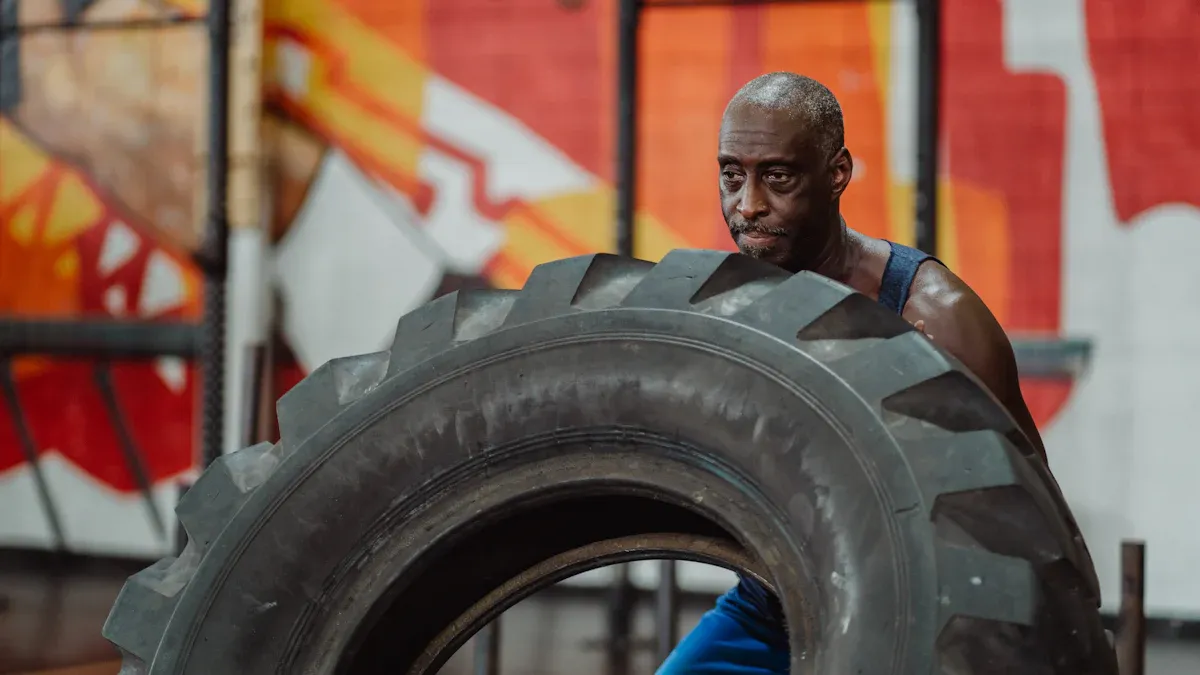
Vulcanized rubber is stronger and lasts longer than regular rubber. The vulcanization process uses heat and chemicals to change rubber. This makes rubber tougher and helps it last longer. You see these benefits every day. Tires on your car use vulcanized rubber. The soles of your shoes use it too.
The global market for vulcanized rubber was $16.5 billion in 2023. Experts think it will keep growing.
Vulcanized rubber handles heat, wear, and aging better. This makes it great for things that need to last.
This process gives rubber more stretch, strength, and resistance to tough conditions.
When you use things made with vulcanized rubber, they work better and last longer. This is true whether you are working or having fun.
Vulcanized rubber is much stronger than regular rubber. It lasts longer too. This makes it great for things like tires and shoes.
Vulcanization means heating rubber with sulfur. This creates strong links inside the rubber. These links help the rubber last longer. They also make it bend without breaking.
If you pick products made from vulcanized rubber, they work better. They can handle tough places, like very hot or cold weather. They also stand up to lots of use.
Many industries use vulcanized rubber. You see it in cars, clothes, and safety gear. People like it because it is tough and does not break easily.
Buying vulcanized rubber products can save you money. You do not have to replace them often. They work well even when things get hard.
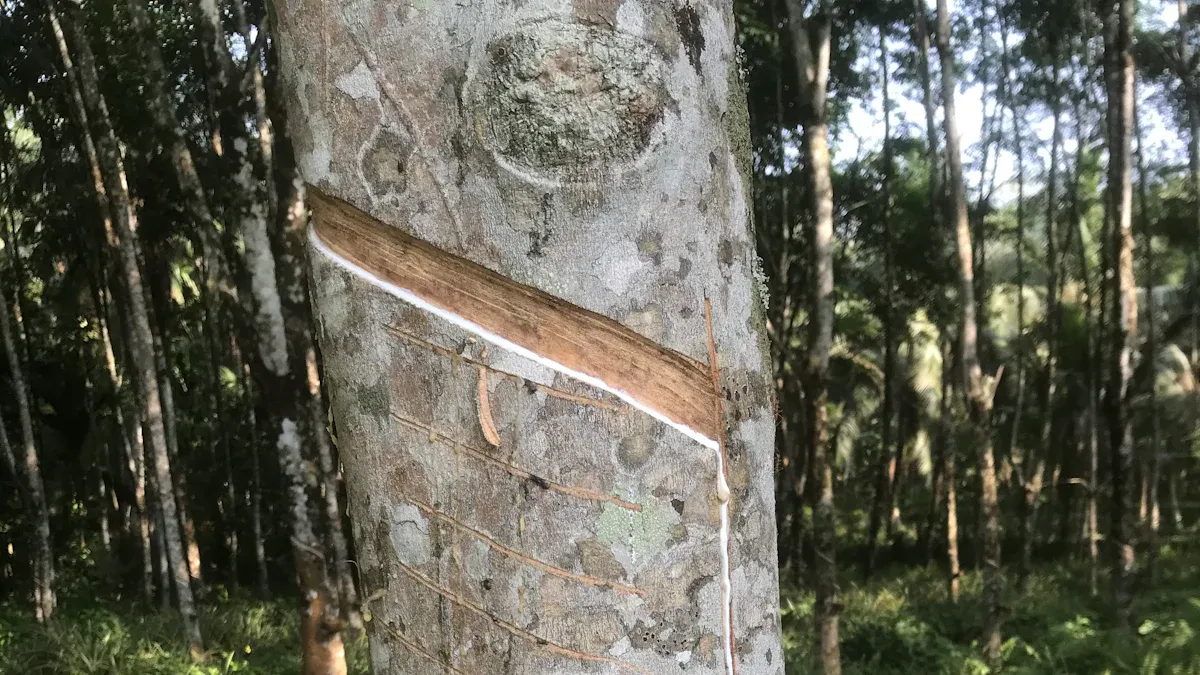
Have you ever wondered why the rubber in your shoes or car tires is so strong and bends easily? The reason is vulcanization. Vulcanization is a chemical process that changes natural or synthetic rubber into a tougher and steadier material. Raw rubber starts out sticky and soft. In the rubber vulcanization process, rubber gets mixed with sulfur and other chemicals. After mixing, it is shaped and then heated. The heat causes a reaction that forms strong cross-links between rubber molecules. These cross-links make rubber harder, stretchier, and much more durable.
Here are the main steps in vulcanizing rubber:
Mixing: Rubber is combined with sulfur, accelerators, and fillers.
Shaping: The mixture is molded into the shape you want.
Vulcanization: Heat and pressure start the chemical reaction.
This rubber vulcanization process makes a material that stands up to heat, chemicals, and wear. The rubber lasts longer and works better in tough places.
Tip: Vulcanization helps rubber work for many things, like tires and waterproof boots.
charles goodyear found vulcanization in 1839. Before this, rubber melted in hot weather and broke in cold weather. charles goodyear worked at the Eagle India Rubber Company in Woburn, Massachusetts. One day, he dropped a mix of rubber and sulfur onto a hot stove by accident. The rubber did not melt. It became hard instead. charles goodyear saw that heat and sulfur changed how rubber worked. He called this process vulcanization, named after the Roman god of fire.
charles goodyear’s discovery changed how people used rubber. Vulcanization made rubber strong and dependable. Companies could make products that lasted longer and worked better. The table below shows how vulcanization helped the rubber industry:
| Evidence | Description |
|---|---|
| Enhanced Durability | Vulcanization made rubber stronger and more useful. |
| Commercialization | The process let companies sell more rubber products. |
| Patent Infringements | charles goodyear’s patents caused legal fights, showing its money value. |
You see vulcanization’s effects every day because of charles goodyear’s work.
Untreated rubber feels soft and sticky. You can stretch it, and it snaps back. This happens because rubber has long chains inside. These chains move easily. That is why rubber bends and stretches.
Rubber is elastic. You pull it, and it goes back to its shape.
It can handle some wear, so it lasts a bit.
The soft feel makes it flexible and easy to shape.
A rubber band shows these features. You stretch it, and it returns to normal. But untreated rubber does not do well in heat or cold. If you leave it in the sun, it can melt or get sticky. In cold weather, it can crack or break.
Here is a table that shows how untreated rubber acts in different conditions:
| Aspect | Observation |
|---|---|
| Temperature Impact | Changes in temperature affect how rubber works, especially after many uses. |
| Ultimate Properties | Rubber gets weaker when it gets hotter. |
| Chain Extensibility | How much rubber stretches changes with temperature. |
| Dynamic Properties | Rubber’s strength drops with heat, especially when it gets very hot. |
| Fatigue Behavior | Rubber cracks more when it is hot. |
Note: Untreated rubber can stretch, but it does not stay strong or last long in tough places.
Vulcanized rubber is much stronger and lasts longer. Vulcanization changes the inside of the rubber. Heat and sulfur make bridges between the chains. These bridges make rubber tougher and help it keep its shape.
Vulcanized rubber is stronger and bounces back better. You can stretch it, and it will not break.
It stays elastic, so it returns to its shape after you pull or press it.
It handles heat, scraping, and chemicals much better than untreated rubber.
Vulcanized rubber lasts longer because it does not wear out fast.
You see these changes in things like car tires and shoe soles. Vulcanized rubber does not melt in the sun or crack in the cold. It stays strong and tough, even with daily use. This process makes it great for things that need to last.
Tests show vulcanized rubber gets better mechanical properties. It has a 29% higher tensile strength. It resists scraping more, so it loses less material. Its density and hardness go up, making it better for heavy use.
Vulcanization makes sulfur bridges between rubber molecules. This change helps vulcanized rubber handle temperature swings. Untreated rubber stays soft and breaks down faster. Vulcanized rubber keeps working in hot or cold weather.
Tip: When you pick vulcanized rubber products, you choose items that are strong, flexible, and made to last.
When rubber is heated with sulfur, cross-linking starts. This makes strong bonds between the long chains in rubber. These bonds act like bridges and connect the chains. The bridges make the rubber much tougher. Imagine weaving threads to make a net. More connections make the net stronger.
Cross-linking helps rubber stretch and snap back better. It also makes it less soft and sticky.
The number of cross-links changes how much rubber can stretch and how strong it feels.
Different sulfur bonds let you change how vulcanized rubber acts.
The amount of chemicals used changes how fast the reaction goes and how the rubber turns out.
You can see these changes in vulcanized rubber. It does not get sticky when it is hot. It does not crack when it is cold. The cross-linked network inside helps rubber handle stress and go back to its shape.
Note: Cross-linking makes rubber more stable and helps it last longer, even with daily use.
Here is a table that shows how more cross-links change the rubber’s properties:
| Parameter | Observation |
|---|---|
| Cross-link Density | More cross-links make rubber stronger in all vulcanization systems. |
| Tensile Strength | Sulfur gives the highest strength at the same cross-link density. |
| Network Structure Distribution | Sulfur and peroxide systems spread out cross-links more evenly than phenolic resin. |
Cross-linking gives vulcanized rubber its strength and long life. When you use this rubber, it works better in many ways.
The cross-linked structure helps rubber stretch and return to shape.
The rubber resists wearing out, so it is good for tires and shoes.
Vulcanized rubber stands up to heat, cold, and chemicals. It does not break down easily.
Tests show that more cross-links make rubber stronger and help it last longer. The table below shows how more cross-links help performance:
| Evidence Type | Description |
|---|---|
| Cross-Linking Density | More cross-links make vulcanized rubber stronger. |
| Temperature Dependence | The rubber stays strong in hot and cold temperatures. |
| Mechanical Performance | More cross-links help rubber resist tearing and keep its strength after being stretched. |
You can follow these steps to see how vulcanization helps rubber:
Heat raw rubber with sulfur or other chemicals.
Start a chemical reaction that makes the rubber’s structure stronger.
Make cross-links between chains, which makes rubber stronger and harder to break.
Cross-linking makes rubber last longer.
The process helps rubber stretch, stay strong in heat, and not change shape.
Vulcanized rubber is the best choice for things that need to be tough.
Tip: When you pick vulcanized rubber, you get a material that can handle daily use, rough treatment, and bad weather.
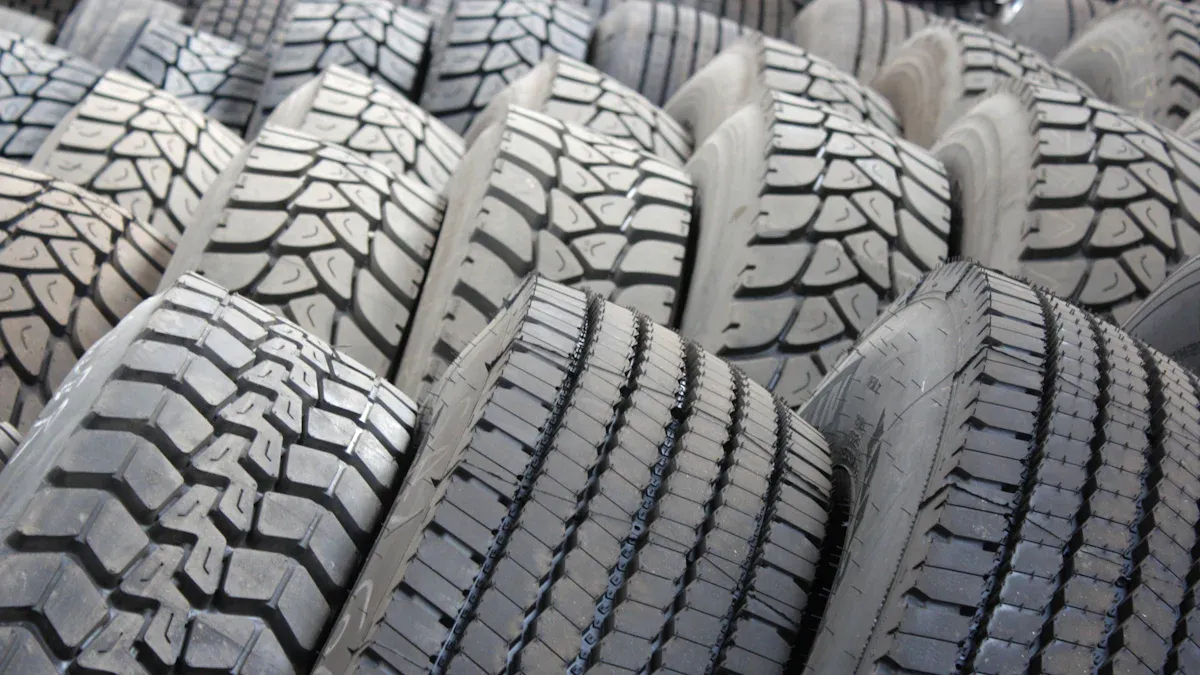
Vulcanized rubber is used in many things you use daily. It is strong and bends easily. It does not let water or chemicals get through. This makes it good for hard jobs. Here are some ways vulcanized rubber is used.
Tires help keep you safe when you travel. Vulcanized rubber makes tires tough and stretchy. Tires can handle bumps, heat, and cold. Most rubber products are vulcanized. Tires are the biggest group. In 2024, over 1.35 billion tires were made with vulcanized rubber. This process helps tires last longer. Tires do not wear out fast, even in tough places.
Vulcanized rubber in tires gives:
Strong protection from tearing and wearing out
Flexibility to take in shocks
Stability in hot and cold weather
Vulcanized rubber is needed for tires. It keeps you safe and makes tires strong.
Vulcanized rubber is found in waterproof clothes and shoes. Raincoats, boots, and sports shoes use it to keep you dry. Vulcanized rubber makes these items bend easily and stay tough. You can move freely and stay dry.
| Type of Clothing | Purpose |
|---|---|
| Raincoats | Waterproof |
| Boots | Waterproof |
| Athletic Shoes | Flexibility, waterproof |
Vulcanized rubber in shoes brings:
Toughness and stretch for comfort all day
Stops cracking and splitting
Lasts long in wet or rough places
Vulcanized rubber soles make shoes strong, bendy, and less slippery. This keeps your feet safe and comfy.
Safety gear like gloves, life jackets, and boots help protect you. Vulcanized rubber gives these items better grip and stops them from wearing out. It also protects from chemicals and heat.
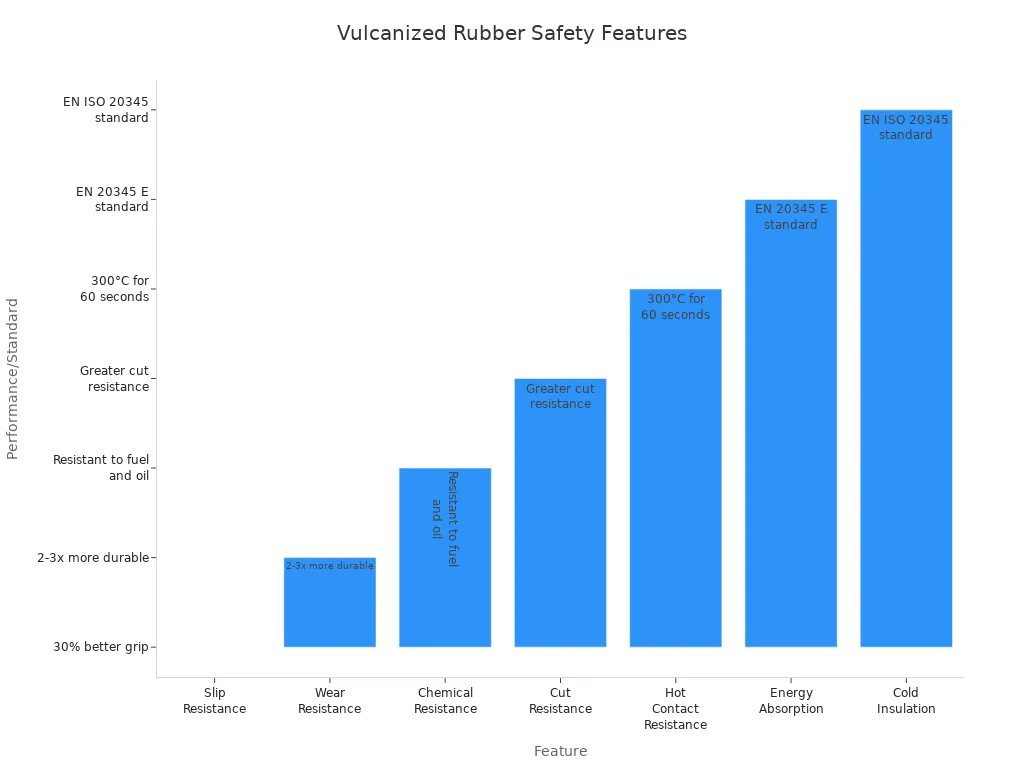
| Feature | Description |
|---|---|
| Slip Resistance | 30% better grip than regular soles |
| Wear Resistance | 2-3 times tougher than other materials |
| Chemical Resistance | Stops damage from fuel and oil |
| Cut Resistance | Better protection from sharp things |
| Hot Contact | Handles 300°C for 60 seconds |
| Cold Insulation | Keeps feet warm in cold places |
Vulcanized rubber in safety gear gives:
Toughness against damage
Stretch for a good fit
Protection from water and chemicals
These things help you stay safe and feel good, no matter what happens.
You find vulcanized rubber in things that last longer. It helps products work better. Companies use it because it does not get ruined by water, chemicals, or heat. You get stronger tires, safer medical tools, and clothes that keep out rain.
Vulcanized rubber stays strong and keeps its shape in hard places.
It helps save money because you do not need to replace things often.
Big industries like healthcare, building, and aerospace use it all the time.
Vulcanized rubber helps make new technology. It helps many industries grow around the world. People will keep using it for a long time.
Vulcanized rubber feels stronger and bends more easily than regular rubber. Heat and sulfur change the rubber during vulcanization. This makes strong links inside the rubber. The result is a tough, waterproof, and long-lasting material.
Charles Goodyear wanted to fix problems with rubber. Before vulcanization, rubber melted when it was hot and broke when it was cold. Goodyear found vulcanization by accident. His discovery made rubber tough and bendy. Now, vulcanized rubber is used in tires, shoes, and waterproof things.
Vulcanized rubber is in car tires, shoes, tanks for making rubber, and safety gear. The material stays strong and bends well. Vulcanized rubber helps keep people safe and comfy. It is used in clothes, tires, and new shoe designs.
Vulcanized rubber lasts longer and does not get damaged easily. The vulcanization process makes rubber tough, bendy, and waterproof. Vulcanized things work well for hard jobs. You see these benefits in tires, shoes, and many other products.
